Flange connections are the core link in terms of pipe and equipment sealing across various industries including petrochemical, power plant, shipbuilding, and heavy machinery. The precise tolerance result of flange sealing surface directly affect sealing performance and operational safety. The wear, corrosion, and deformation of flange sealing surface can easily lead to media leakage, affecting production efficiency and potentially posing safety hazards.
On-site flange sealing surface machining method, as an efficient and convenient solution, has gradually replaced traditional workshop machining, becoming a core process in industrial operation and maintenance. Today, we will comprehensively break down on-site flange sealing surface machining, guiding you to understand its types, processing methods, application scenarios, and core advantage.
① Common Flange Sealing Surface Types
There are five most common flange sealing surfaces in the industrial field, suitable for different operating conditions:
First, the flat face (FF), convenient for basic installation, suitable for low-pressure and mild operating conditions.
Second, the raised face (RF), the most widely used, suitable for medium and low-pressure pipeline connections.
Third, the male and female (MF), with better sealing performance than the raised face, suitable for medium and high-pressure scenarios.
Fourth, the tongue and groove face (TG), high precision and reliable sealing, suitable for high-pressure corrosive media.
And fifth, the ring type joint face (RTJ), with the best sealing performance, used in high-temperature and high-pressure core equipment, and also the type with the highest on-site machining precision requirements.
② On Site Machining via a Portable Flange Facing Machine
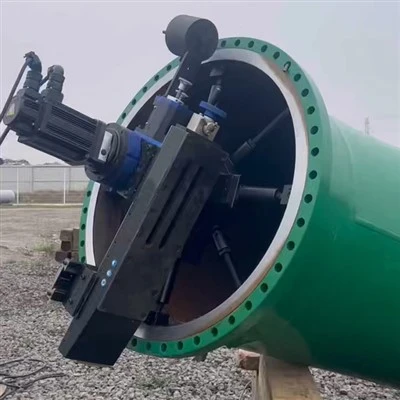
The traditional workshop processing method requires disassembling and transporting flanges, which is time-consuming, labor-intensive, and prone to secondary damage. Our Portable flange machining machine series, as a core type of on-site machining equipment, completely solve this problem, allowing for direct on-site processing without disassembly.
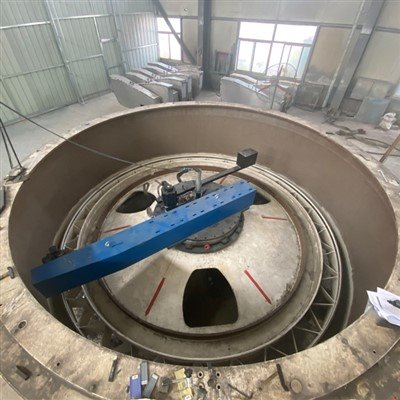
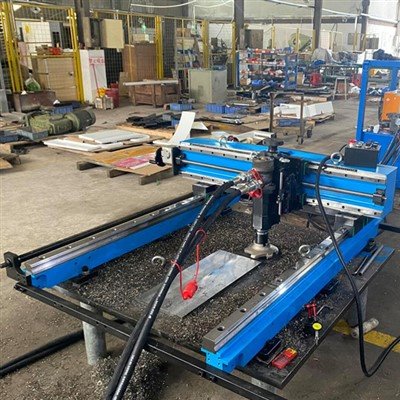
We, JDA as a mainstream designer and manufacturer of field machining equipment, our portable flange facing tool series is small in size and detachable. Based on installation method, it is divided into ID mount flange facer machine and OD mount flange facer machine.
The ID mount flange facing machine is suitable for machining jobs on medium and large diameter flanges, with internal support for fixation, suitable for operation in confined spaces. The OD mount flange facing machine is suitable for special machining situations, with external clamping for fixation, and are easy to operate. Both have a simple working flow through three steps: positioning, tool adjustment, and cutting, meeting sealing requirements.
③ Typical Industry Applications of On Site Flange Facing Jobs
Our, JDA's on site flange facing machine is widely used in multiple industries.
In the petrochemical industry, it's used to repair pipeline and reactor flanges to prevent leaks.
In the power industry, it ensures the sealing accuracy of boiler and turbine flanges, reducing downtime losses.
In the shipbuilding industry, id mount flange facing equipment and od mount flange facing equipment adapt to flanges of different sizes, improving dock repair efficiency.
In the heavy machinery industry, our portable flange resurfacing machine can repair worn flanges on-site, avoiding secondary damage.
In the general manufacturing industry, the portable flange refacing machine adapts to small and medium-diameter flanges, meeting routine sealing requirements.
④ Advantages of On Site Flange Facing
Compared to traditional workshop processing method, our on-site flange facing machine offers significant advantages.
First, the flange refacing machine shortens downtime. The small flange facing operations only take a few hours, significantly reducing production capacity loss.
Second, the in situ flange facing tool avoids secondary damage. On-site machining requires no disassembly, and our in situ flange facing machine precisely cuts, ensuring processing quality.
Third, the on site flange facing tool reduces maintenance costs, saving disassembly and transportation costs, and old flanges can be repaired for reuse.
Fourth, the on site flange facer machine has strong adaptability. internal and external clamped flange facing machines can flexibly handle complex scenarios such as high altitudes and confined spaces, adapting to various working conditions.
So our portable flange facer machine is a wonderful tool in industrial operations and maintenance. Five main types of sealing surfaces are suitable for different working conditions. Our portable flange machining machines, as excellent portable machining equipment, combine the advantages of internal and external clamping installation models to achieve precise on-site machining.
They are widely used in many industries and provide a guarantee for the safe and stable operation of equipment with their advantages of high efficiency, low cost and high adaptability.
Contact JDA team today to get a tailored solution for portable flange facing machine.