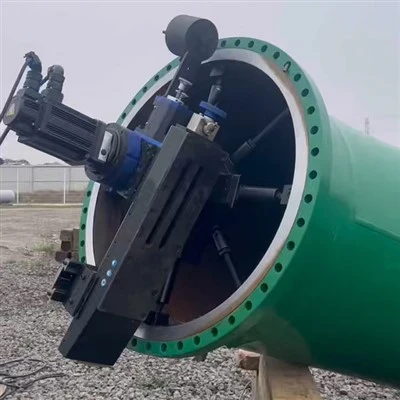
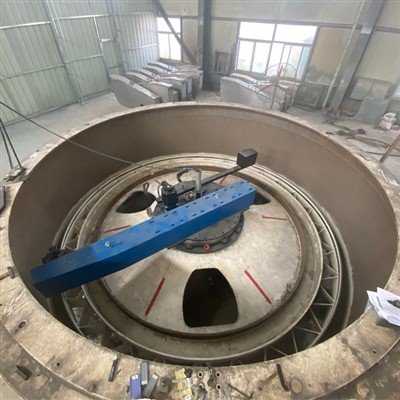
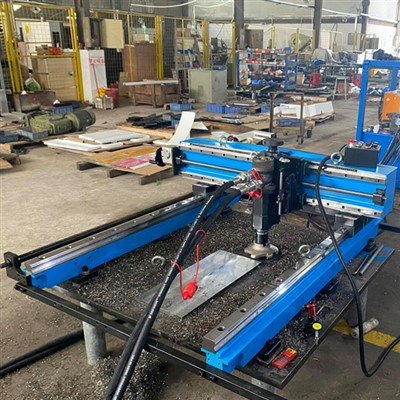
Portable boring machines are primarily designed based on modular principles, ensuring quick and easy installation and operation. Operators must thoroughly understand the working principles of these handheld boring machines to utilize them flexibly and proficiently, thereby maximizing their effectiveness across various industrial sectors.
During operation, the operator of a portable boring machine should avoid leaving the work site to prevent the cutting tool from jamming due to excessive travel or to avoid damage to rotating components. The three adjustment screws located on the overload protection plate-situated at the outer end of the feed screw nut assembly-are pre-calibrated at the factory and do not require user adjustment (over-tightening these screws would render the overload clutch plate ineffective). When changing speeds, the motor's power supply must first be disconnected; wait until the spindle has come to a complete stop before shifting gears. If shifting proves difficult, the spindle can be manually rotated to facilitate the process. Once the portable boring machine is set up and ready, briefly "jog" the spindle motor switch to start it; for the initial rough boring pass, the spindle motor speed should be set to a slow RPM. To accommodate specific machining requirements, a manual feed mechanism (consisting of a hand crank and handle) is installed at one end of the feed screw located beneath the motor. This allows for synchronized manual feeding of the screw and the cutting tool assembly; additionally, users can independently adjust the speed of the automatic feed mechanism to suit their needs.
During operation, the depth of cut for rough boring on a portable boring machine can be increased to a certain extent; however, similar to CNC milling operations, the material removal per pass should not be excessive. The depth of cut for finish boring is typically much smaller. In summary, the specific depth of cut is a variable parameter that users can determine based on the actual working conditions, with the ideal setting being one that prevents tool chatter. When preparing for the next machining pass, turn off the spindle motor and remove the boring tool. Use the quick-return mechanism to retract the boring bar to its starting position, then re-install the boring tool holder-following the same procedure used for the previous pass-to resume machining. It is essential to ensure that the boring tool is properly reset to its starting position before initiating each subsequent boring pass.