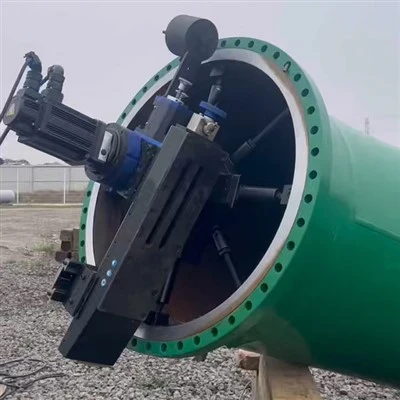
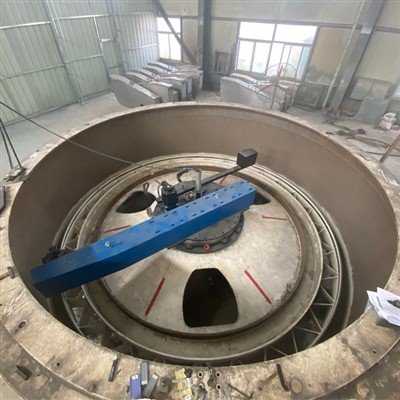
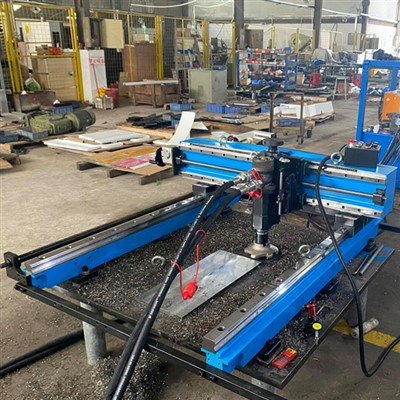
A flange facing machine is primarily utilized to perform machining operations-such as turning and milling-on flange faces, thereby achieving the required standards for dimensional accuracy, surface roughness, and flatness.
Its operating principle is grounded in a precise mechanical transmission and control system. Typically, the workpiece (the flange) is secured to a worktable, where fixtures ensure its stability throughout the machining process. The cutting tool is mounted on a movable tool holder, which is capable of precise movement and positioning across multiple axes. During the machining process, the tool executes cutting operations on the flange face in accordance with a pre-programmed sequence and path, removing excess material to form a surface profile that meets the specific design specifications.