In fields such as construction machinery maintenance, mining equipment upkeep, and pipeline bore repair, integrated boring and welding machines have become indispensable assets. By combining boring and welding operations into a single process, they significantly streamline workflows and boost operational efficiency. However, the market is flooded with a vast array of integrated boring and welding machines, exhibiting wide disparities in price, configuration, and performance. Consequently, many purchasers and operators tend to follow trends blindly when making selections; they either acquire equipment that fails to meet their actual operational requirements or pay a premium for superfluous features, only to face frequent malfunctions and high maintenance costs during subsequent use. So, when confronted with diverse working conditions, how can one accurately select the integrated boring and welding machine that is best suited to the task?
When purchasing an integrated boring and welding machine, the selection process should center on four core dimensions: working conditions, equipment configuration, performance parameters, and after-sales support. It is crucial to avoid blind selection; every aspect of the equipment must align with actual operational needs to ensure the final choice is durable, user-friendly, and offers excellent value for money.
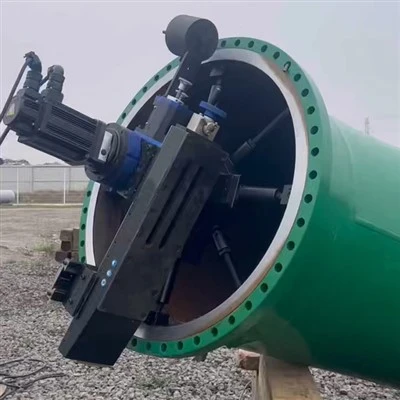
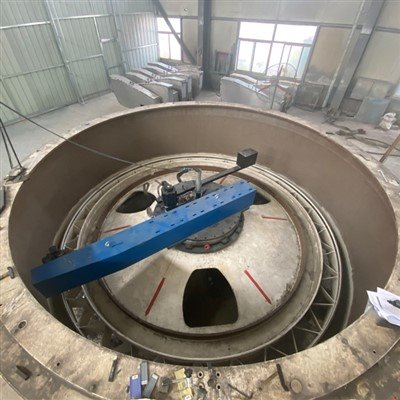
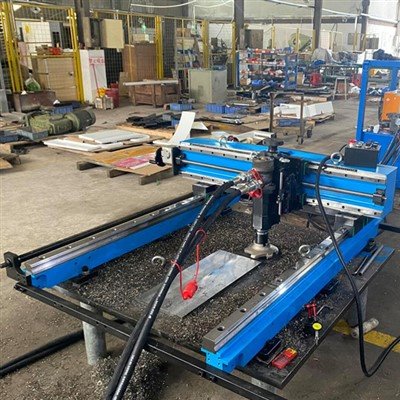
The first step in the purchasing process is to determine the appropriate equipment type based on the specific construction scenario. Integrated boring and welding machines generally fall into three categories: portable, mobile, and stationary. Each category offers vastly different levels of suitability for various environments. For outdoor field operations or on-site maintenance of construction machinery, portable integrated boring and welding machines are the preferred choice. These units are compact, lightweight, and easy to assemble and disassemble; they require no heavy transport vehicles and can be taken directly to the job site, offering exceptional flexibility for sporadic tasks such as repairing worn bores or welding seams. For batch bore processing or the repair of large workpieces within a workshop setting, mobile integrated boring and welding machines are ideal. Equipped with a mobile base, these units can be freely repositioned within the workshop while maintaining superior processing precision and power stability, making them capable of handling continuous operations on medium-to-large workpieces. Finally, for large-scale factories or specialized processing workshops requiring high-precision, batch boring and welding operations, stationary integrated boring and welding machines are the optimal choice. These units offer exceptional stability, an expansive processing range, and a high degree of precision control, making them perfectly suited for scaled, standardized production environments.
Secondly, it is essential to meticulously verify the core performance parameters to avoid falling victim to inflated or misleading specifications. First, consider the *processing range*: clearly define the equipment's boring diameter range, boring bar stroke, and welding thickness. These specifications must cover the dimensions of workpieces encountered in your daily operations, ideally with a 10–20% margin to ensure you are not unable to work on larger-sized components. Second, consider the *power configuration*: prioritize units equipped with pure copper motors, which offer robust power, rapid heat dissipation, and superior durability; avoid aluminum-wound motors, as they are prone to overheating, have higher failure rates, and possess shorter service lives. Third, consider *precision parameters*: pay close attention to boring coaxiality and dimensional tolerances. For general engineering maintenance equipment, a tolerance control within 0.02 mm is typically sufficient to meet requirements; however, high-precision machining applications necessitate selecting equipment with even tighter tolerances. Fourth, consider *welding functionality*: distinguish between different welding modes-such as TIG welding (argon arc) and MIG/MAG welding (gas-shielded)-and select the appropriate mode based on the workpiece material (e.g., carbon steel, stainless steel, alloy steel) to ensure high-quality weld formation free of porosity or cracks.
Next, inspect the equipment's manufacturing processes and the quality of its finer details to assess its durability. A high-quality integrated boring and welding machine features a body constructed from thickened steel, offering exceptional load-bearing capacity and impact resistance, ensuring it remains free from deformation even after prolonged use. Core transmission components-such as guide rails and lead screws-should undergo quenching and precision grinding treatments to create smooth, wear-resistant surfaces that guarantee stable precision during long-term operation. The internal wiring layout should be neat and orderly, with robust protective measures in place to prevent wire abrasion or electrical leakage during outdoor operations. The control panel should feature a simple, intuitive design with responsive buttons, allowing even novice operators to quickly master the equipment. Additionally, whenever possible, opt for equipment with an integrated, all-in-one design; this facilitates seamless switching between boring and welding functions without the need for complex modifications, thereby reducing the likelihood of mechanical failure.
Finally, place significant emphasis on *after-sales support and warranty services*. Given the nature of mechanical equipment, occasional malfunctions are inevitable during long-term use; reliable after-sales support can significantly minimize the hassle associated with future repairs. When making a purchase, prioritize manufacturers that possess official production certifications and a comprehensive after-sales service network. Verify the equipment's warranty period, the manufacturer's response time for repairs, and their capacity to supply spare parts to avoid purchasing "uncertified" or "no-name" products-which could leave you stranded without spare parts or technical support should a malfunction occur later on. Furthermore, request the equipment's operation manual and warranty certificate, and familiarize yourself with the recommended daily maintenance procedures to maximize the equipment's service life.
Ultimately, the best choice for an integrated boring and welding machine is the one that is perfectly tailored to your specific working conditions and operational requirements. Rather than blindly chasing high prices and top-tier specifications, one should select equipment types based on specific construction scenarios and processing requirements. By rigorously verifying performance parameters, strictly controlling product quality, and ensuring comprehensive after-sales support, it is possible to acquire equipment that offers excellent value for money-being both durable and user-friendly. Such equipment not only meets daily operational demands but also minimizes future usage and maintenance costs, thereby truly realizing its practical utility.