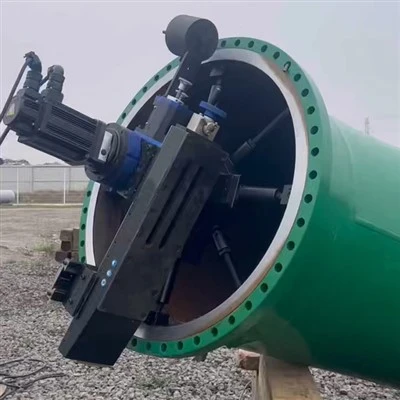
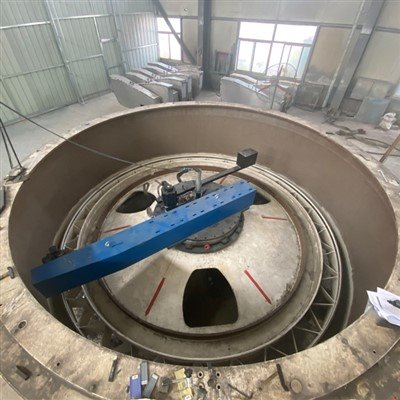
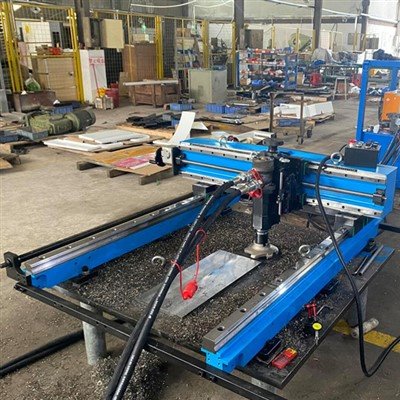
Thanks to its flexibility and convenience, the portable shaft-end lathe has become an invaluable asset for on-site machining operations across numerous industries. However, the frequent movement and usage inherent to its application inevitably lead to wear and tear on the equipment-a factor that cannot be overlooked. Consequently, a systematic approach to maintenance and upkeep is crucial for ensuring stable performance and extending the machine's service life. The following sections outline practical maintenance essentials from various perspectives.
Cleaning: The Foundation of Routine Maintenance
During machining operations, impurities such as metal chips, oil residue, and dust can easily accumulate on both the exterior and interior surfaces of the lathe. Metal chips, with their sharp edges, pose a particular risk; if they infiltrate the transmission components or guide rails, they can scratch precision surfaces and accelerate wear. Oil residue, meanwhile, attracts dust to form a viscous grime that hinders heat dissipation and impedes the movement of components. Therefore, immediately after each use, it is essential to use a soft-bristled brush to clear debris from the machine body, tool post, guide rails, and other areas. Subsequently, use a clean cotton cloth dampened with a specialized cleaning agent to wipe away any oil stains. For hard-to-reach crevices, compressed air can be used for purging; however, care must be taken to regulate the air pressure to prevent the forceful airflow from damaging sensitive components. Furthermore, impurities within the cooling system should be cleared periodically to prevent the coolant from deteriorating or clogging the pipelines, which would compromise cooling efficiency.
Inspection and Fastening: Prevention is Better than Cure
The vibrations and frequent relocation inherent to lathe operation can cause connections between components to loosen. A comprehensive inspection should be conducted weekly, with particular attention paid to critical areas such as spindle mounting bolts, tool post set screws, and guide rail clamping plates. These fasteners should be tightened using professional tools to the specific torque values prescribed in the equipment manual. Regarding the transmission system, the tension and condition of belts and chains must be inspected; if a belt shows signs of cracking or a chain exhibits elongation in its pitch, the component should be replaced immediately to prevent any compromise in transmission precision and efficiency. Additionally, the electrical system must not be overlooked; inspect wiring for signs of damage or aging, and verify that terminal connections are secure to prevent malfunctions caused by poor electrical contact.
Lubrication: The Key to Reducing Friction
Proper lubrication effectively minimizes friction between moving parts, thereby reducing wear and tear. Furthermore, it serves the dual purpose of providing rust protection and facilitating heat dissipation. Since different components of the machine have distinct lubrication requirements, it is imperative to strictly adhere to the equipment's instruction manual when selecting and applying the appropriate lubricants. For instance, guide rails and lead screws typically require lubricating oil of moderate viscosity to ensure smooth sliding, whereas components such as gearboxes necessitate high-viscosity grease to provide long-lasting protection. The lubrication schedule is equally critical; generally, guide rails and lead screws should be lubricated daily, while enclosed components like gearboxes can have their grease replaced every 3 to 6 months. When applying lubricant, ensure it is distributed evenly to avoid waste and contamination caused by excess application; simultaneously, remove any old lubricant to prevent impurities from becoming mixed in.
Precision Calibration: The Core of Ensuring Machining Quality
As usage time accumulates, the machining precision of a lathe may begin to drift. Regular precision calibration is a necessary measure to guarantee machining quality. It is recommended that every 3 to 6 months, professional inspection tools-such as dial indicators or laser interferometers-be used to assess key parameters, including spindle runout, guide rail straightness, and tool post positioning accuracy. If any precision deviations exceeding the allowable tolerance are detected, immediate adjustments must be made. Minor deviations can often be corrected by adjusting nuts, shims, or similar components; however, significant deviations may require the intervention of professional technicians for repair and calibration. Furthermore, simple precision checks can be performed prior to every tool change or before machining large workpieces to ensure that the required machining precision standards are met.
Proper Storage: Protection During Idle Periods
When a lathe is to remain idle for an extended period, proper storage procedures are paramount. First, the lathe should be thoroughly cleaned and lubricated, then tightly covered with a dust cover to prevent dust ingress. The storage environment must be kept dry and well-ventilated, free from excessive humidity and corrosive gases; placing desiccant agents nearby can help reduce atmospheric moisture levels. If conditions permit, the lathe should be placed on a dedicated storage stand to prevent direct contact with the floor, thereby protecting the base components from moisture damage and rust. For battery-powered portable lathes, it is also essential to perform periodic battery charge-discharge maintenance to prevent battery damage caused by prolonged deep discharge.