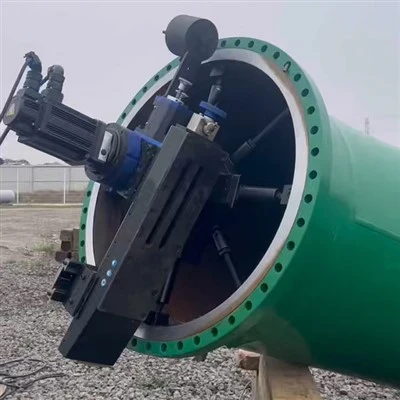
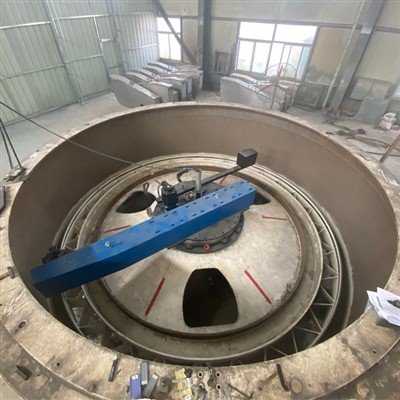
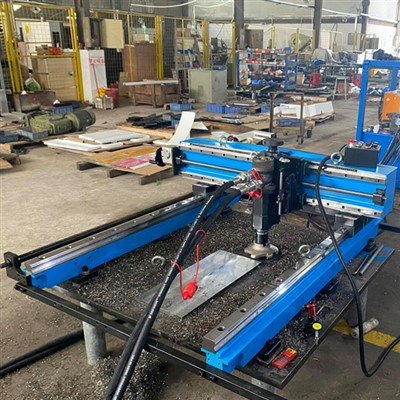
In scenarios involving the maintenance of construction machinery, upkeep of mining equipment, and emergency repair of municipal facilities, components such as shaft bores and bearing seats on large-scale equipment are prone to issues like wear and deformation. Traditional boring machines, due to their bulky size and lack of mobility, are often incapable of performing on-site operations. Consequently, portable boring machines-distinguished by their flexibility and efficiency-have emerged as "essential equipment" for on-site machining tasks. However, many industry practitioners encounter problems such as substandard machining precision or equipment damage due to improper model selection or non-standardized operation. Today, drawing upon practical application experience, we will deconstruct the logic behind selecting a portable boring machine, highlight key operational procedures, and provide solutions for common issues, thereby helping industry professionals avoid unnecessary pitfalls.
Avoiding Pitfalls in Selection: Matching Core Parameters to Specific Scenarios
The core principle in selecting a portable boring machine is "scenario compatibility." Selection requires a comprehensive assessment of factors such as the bore diameter to be machined, material type, operating environment, and precision requirements; one should avoid the blind pursuit of simply "higher parameters are better."
In terms of machining diameter, the working range of portable boring machines currently available on the market typically spans from 20 mm to 500 mm, with significant variations in the compatible range across different models. Small-scale portable boring machines (machining diameters: 20 mm–100 mm) are lightweight and compact-often weighing less than 10 kg-making them ideal for the precision repair of components such as excavator pin bores and small bearing seats; they are particularly well-suited for operations at heights or within confined spaces. Medium-sized models (machining diameters: 100 mm–300 mm) feature greater power and are capable of handling the shaft bore machining requirements of equipment such as wheel loaders and crushers; typically weighing between 20 kg and 50 kg, these units are often equipped with mobile stands that strike a balance between flexibility and stability. Large-scale models (machining diameters: 300 mm–500 mm) are designed for the on-site machining of heavy-duty equipment-such as tunnel boring machines and large-scale valves-and typically require integration with a hydraulic power system; while they may offer slightly less flexibility, they deliver superior machining efficiency and load-bearing capacity.
Compatibility with the material being machined is equally critical. When machining standard materials such as carbon steel or cast iron, a standard high-speed steel boring tool is sufficient to meet requirements. However, when machining high-strength materials-such as stainless steel or alloy steel-it is necessary to utilize a carbide boring tool in conjunction with a higher-powered machine model (typically featuring a spindle power of no less than 3 kW). This prevents premature tool wear and a rough surface finish caused by insufficient power. Furthermore, the specific nature of the operating environment must be taken into account: for outdoor operations, select a model with a high ingress protection (IP) rating to prevent rain and dust from entering the machine body and compromising its operation; for high-altitude work, prioritize cordless models powered by lithium-ion batteries to eliminate the constraints of power cords and enhance operational safety.
Precision requirements constitute one of the core criteria in the machine selection process. For routine maintenance scenarios, a model offering a positioning accuracy of ±0.02 mm and a surface roughness of Ra ≤ 1.6 μm is generally adequate. However, for the machining of precision equipment (such as the repair of machine tool spindle bores), it is imperative to select a high-precision model equipped with a digital readout (DRO) system capable of achieving an accuracy of ±0.01 mm. Additionally, close attention should be paid to the machine's structural rigidity to prevent vibration during the machining process, which could otherwise lead to deviations in precision.
Key Operational Stages: Mastering Details to Enhance Machining Quality
The operational core of a portable boring machine revolves around three key stages: "precise positioning," "stable cutting," and "proper cooling." These three stages directly impact both machining accuracy and the service life of the equipment, and they represent the areas where novices are most prone to making errors.
Precise positioning serves as the foundation. Prior to commencing work, the surface to be machined must be thoroughly cleaned to remove any oil stains or rust, ensuring that the reference plane is flat and level. A dial indicator or laser alignment tool should be employed to calibrate the coaxiality between the boring machine and the bore being machined, keeping the deviation within a tolerance of 0.02 mm. For bores exhibiting uneven wear, manual grinding and leveling must be performed first before mounting the boring machine; this prevents the bore from becoming eccentric after machining due to an inclined reference plane. During installation, all mounting bolts must be securely tightened; where necessary, expansion sleeves should be utilized to firmly anchor the machine and prevent any displacement during the machining process.
Stable cutting requires the precise control of cutting parameters and feed rates. Select an appropriate boring tool spindle speed based on the bore diameter and workpiece material (typically 300–800 rpm for carbon steel and 100–300 rpm for stainless steel). Maintain a uniform feed rate (recommended at 0.1–0.3 mm/rev) to prevent sudden acceleration, which could lead to tool tip chipping or the formation of steps on the machined surface. During the cutting process, continuously monitor the cutting conditions in real time; if issues such as excessively thick chips or smoking occur, immediately reduce the spindle speed or feed rate. Simultaneously, inspect the boring tool for wear and replace it if necessary.
Proper cooling is crucial for extending tool life and enhancing machining precision. When machining standard materials, an emulsified coolant may be used; however, when machining high-strength materials, the use of specialized cutting oil is recommended, as it not only lowers cutting temperatures but also improves lubrication and reduces tool wear. Ensure that the coolant is sprayed uniformly across the cutting zone to prevent localized overheating that could lead to workpiece deformation. Additionally, pay close attention to the cleanliness of the coolant, replacing it periodically to prevent impurities from entering the cutting interface and compromising machining quality.