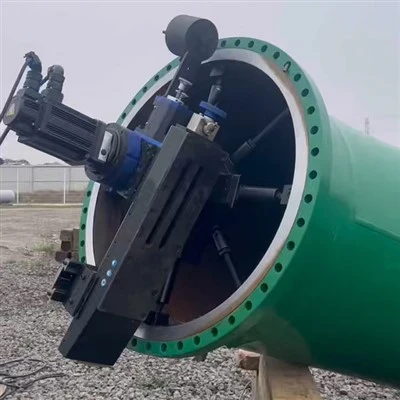
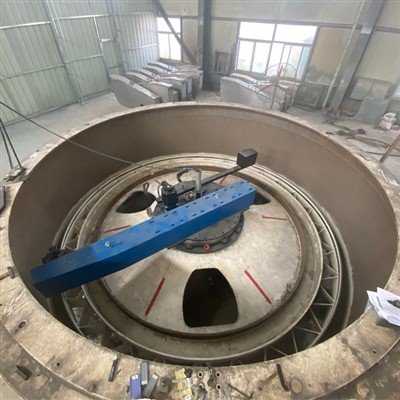
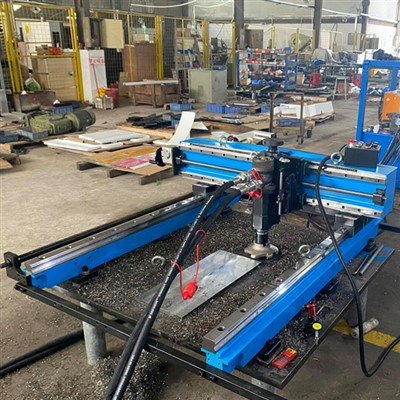
Technicians who frequently work in the field or provide on-site heavy machinery repair services are always looking for a portable boring and welding machine that is both user-friendly and durable. However, with the vast array of models available on the market, a lack of expertise in selection can easily lead to costly mistakes. In reality, when choosing this type of equipment, there is no need to blindly chase high prices; by focusing on a few practical key criteria, you can select a machine that is efficient to operate and prone to fewer malfunctions.
First, consider the equipment's portability and ease of assembly. The very purpose of choosing a "portable" unit is to facilitate easy transport and rapid on-site deployment. The total weight of the machine should not be excessively heavy, otherwise, loading and unloading it from a vehicle becomes a strenuous task. Furthermore, the disassembly and assembly process should not be overly complicated; a single technician should be able to complete the setup, positioning, and calibration independently, allowing for quick startup and operation upon arrival at the job site without delaying critical emergency repairs. The materials used for the support brackets and boring bar must be robust and substantial-not flimsy or lightweight-as inadequate structural integrity can lead to vibrations during operation, compromising machining precision and overall durability.
Second, evaluate the core machining performance, paying close attention to the precision of the boring bar and the stability of the motor. The boring bar directly determines the concentricity of the machined bore; therefore, it must be constructed from wear-resistant materials that are resistant to deformation. Its length and machining range should be sufficient to meet the common repair requirements for excavator boom bores and pin holes. The motor must provide ample power and operate smoothly; even during continuous operation, it should not overheat or stall easily. Moreover, it should be capable of functioning normally even under the unstable voltage conditions often encountered in remote field environments, thereby preventing equipment failure in the middle of a job.
Third, consider operational ease and adaptability. The equipment's control panel should be intuitive and easy to understand, with convenient controls for speed adjustment and positioning functions; even a novice technician should be able to master its operation after a brief period of familiarization. The parameters for both welding and boring operations should be flexibly adjustable to accommodate workpieces made from various materials-such as carbon steel, cast iron, and alloy steel-allowing the machine to handle everything from small-diameter bores to deep-hole repairs with ease. Additionally, the interchangeability of spare parts is crucial; for consumable components like cutting inserts and seals, replacements should be readily available and easy to install in the future, eliminating the need to wait for custom-ordered parts from the manufacturer.
Finally, look into after-sales support. Whenever possible, choose a manufacturer that offers a formal warranty and support service. This ensures that if the equipment encounters minor technical issues, you can access remote troubleshooting guidance and spare parts supplies, preventing delays caused by having to figure out solutions on your own. All things considered, the key criteria for selecting a portable boring and welding machine are ease of transport and assembly, stable operation, sufficient precision, and convenient after-sales support. Such a machine effectively meets the practical demands of on-site field repairs, ensuring a hassle-free and efficient workflow that proves to be a cost-effective investment in the long run.