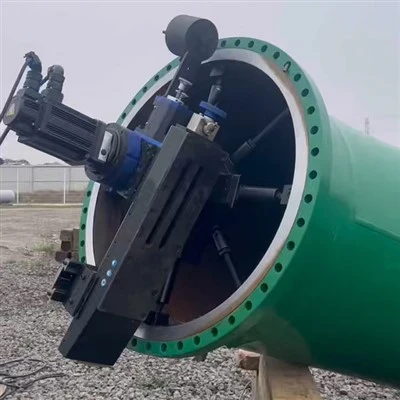
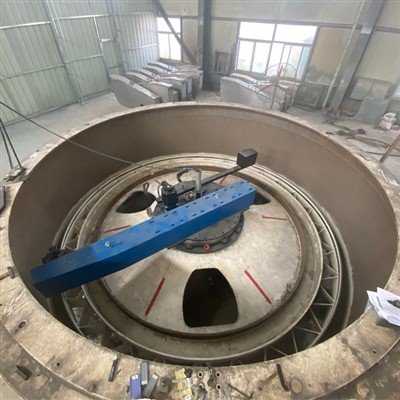
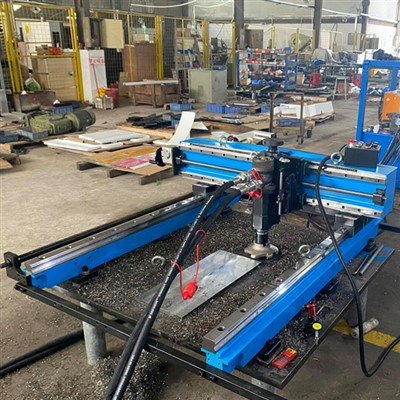
A combined boring and welding machine is a multi-functional piece of equipment that integrates both boring and welding capabilities; thanks to its high efficiency and precision, it plays a pivotal role across numerous industries. Given the varying processing requirements and technical standards specific to each sector, the application of these integrated machines exhibits distinct characteristics tailored to the unique demands of each industry.
In the mechanical manufacturing sector-particularly in the production of heavy machinery-the machining precision and joint strength of large-scale components are of paramount importance. Consider, for instance, the massive frames of mining machinery or the booms of port cranes: these components are characterized by their immense size and structural complexity, necessitating high-precision boring of bore systems and planar surfaces, while simultaneously ensuring the strength and leak-tightness of welded joints. A combined boring and welding machine can execute both the boring and welding processes within a single workpiece setup, thereby eliminating the cumulative errors associated with multiple re-clampings. This not only enhances machining precision but also-through its highly efficient welding capabilities-enables the rapid welding of thick-gauge plates, guaranteeing the overall structural integrity and stability of the components and significantly boosting production efficiency.
The application of combined boring and welding machines in the shipbuilding industry is equally distinctive. Critical ship components-such as engine cylinder blocks and rudder shafts-are subject to exceptionally rigorous standards regarding machining precision and surface finish. These integrated machines are capable of performing precision boring on the internal bores and end faces of such components, thereby satisfying the exacting requirements for dimensional fit and assembly accuracy. In terms of welding, ship structures typically involve the joining of large, thick steel plates; traditional welding equipment often suffers from low efficiency, making it difficult to consistently guarantee weld quality. In contrast, the combined boring and welding machine facilitates automated welding; by precisely controlling welding parameters, it ensures uniform and robust weld seams, effectively enhancing the watertightness and overall structural strength of the vessel-thereby safeguarding its safe navigation within complex marine environments.
The aerospace industry imposes requirements on component quality and reliability that border on the uncompromising. Within this sector, many components are fabricated from specialized materials (such as titanium alloys and superalloys), feature intricate structural designs, and demand exceptionally high levels of precision. Combined boring and welding machines are ideally suited for the precision machining of such critical aerospace components, including aircraft engine blades and airframe structural frames. During the boring phase, the machine achieves micron-level machining precision, ensuring that component dimensions and geometric tolerances strictly adhere to design specifications. In terms of welding, it employs advanced processes-such as Argon Arc Welding-to execute precise welds on thin-walled or deformation-prone components. This minimizes the heat-affected zone and prevents the occurrence of deformation or cracking, thereby guaranteeing the high performance and reliability of aerospace components.
In the energy equipment manufacturing sector-encompassing thermal power generation, nuclear power facilities, and similar fields-large-scale pressure vessels, piping systems, and other critical components demand exceptionally high standards of machining and welding quality to ensure the overall safety and stability of the equipment. Integrated boring and welding machines are capable of boring specific features-such as flanges and nozzles-on pressure vessels, thereby guaranteeing the flatness and surface finish of sealing faces. During the welding process, the machine's automated welding function facilitates multi-layer, multi-pass welding; by precisely controlling weld penetration depth and bead width, it ensures the structural strength and corrosion resistance of the welded joints, effectively extending the service life and enhancing the operational safety of energy equipment.
The application of integrated boring and welding machines across diverse industries is closely tailored to meet the unique requirements of each specific sector. By leveraging their combined advantages in both boring and welding, these machines provide robust technical support and essential equipment guarantees, thereby facilitating the high-quality development of industries across the board.